Pocket Fit food update: the diary you still open in week eight
Digital food tracking works when people keep doing it - meta-analyses put the average extra weight loss around 2 to 3 kg when diet and activity are self-monitored on a phone. The product problem is not more fields. It is fewer reasons to quit.
8 min readUpdated September 2026
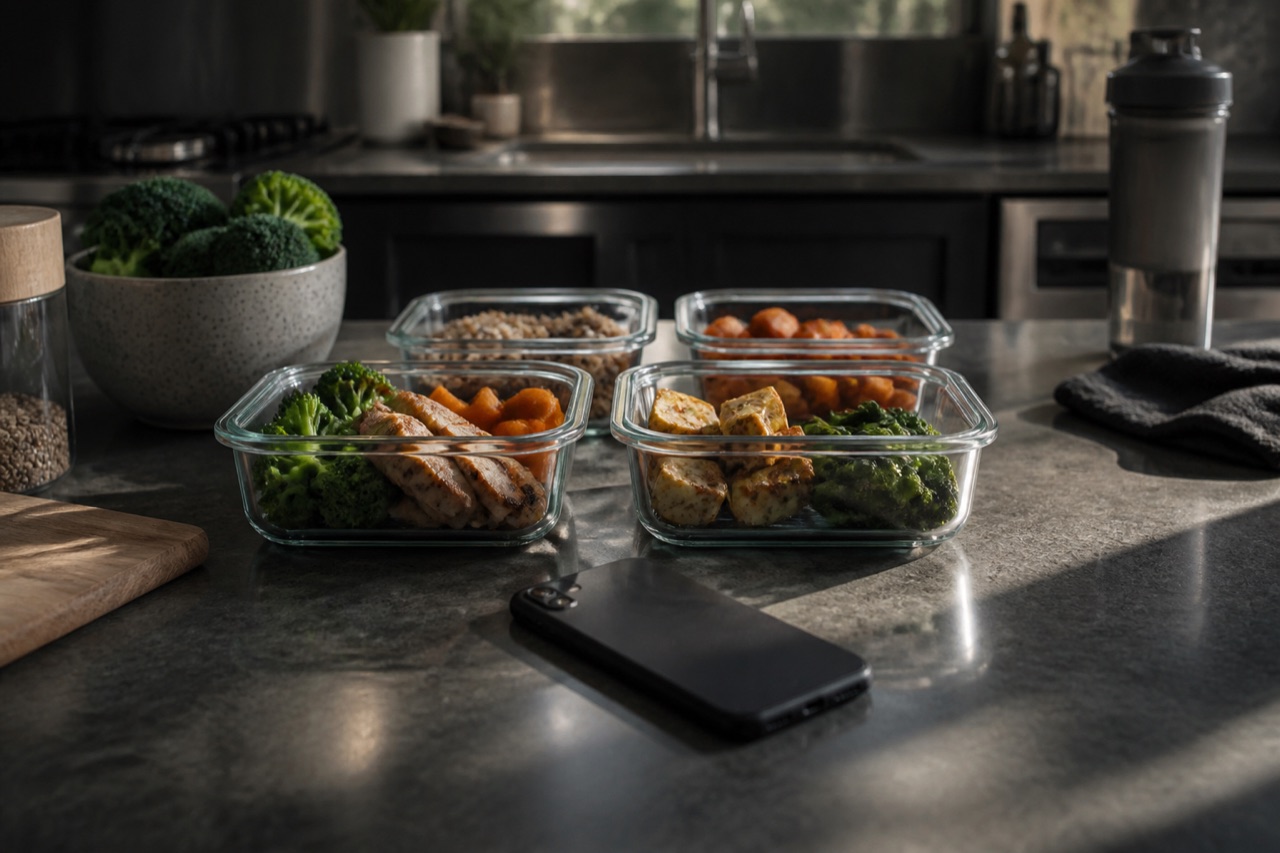
You meant to log lunch. By evening the plate is a memory, the app wants a barcode you cannot find, and dinner becomes "I'll start tomorrow." The reasonable assumption is that you lack discipline. Often the app is asking for laboratory precision from a Tuesday that only had eight free minutes.
Pocket Fit's food work in this release is aimed at that eight-minute Tuesday. Fuel is still the same idea - scan a plate or a barcode, check protein, carbs and fat, no red numbers and no shame - but the pipeline behind it got sharper: plated meals can split into components, barcode logging is less fragile, recents carry full servings so re-log is one tap, and daily calorie targets use Mifflin-St Jeor instead of a flat per-kg table. Share cards let you send a day without turning food into a performance.
If you want the wider "which food app" map first, start at the best food tracking app comparison. This post is what changed inside Pocket Fit.
Our bias, stated first
We make Pocket Fit. We sell a subscription. Food is part of how we earn it, so treat every sentence about Fuel as a claim from an interested party.
What we can do is separate product facts from diet folklore. Feature behaviour below is what we shipped. The research numbers come from published reviews, with sources at the end. We have not run a multi-year RCT of photo logging versus MyFitnessPal, and we will not pretend we did.
The short answer
Use the new food tools if your diary dies on friction: mixed plates, missing barcodes, wrong calorie targets, or the social urge to share a day without rebuilding it from scratch.
Keep a specialist micronutrient app beside us if you need Cronometer-level nutrient depth every day. Pocket Fit is training plus food in one place, not a lab panel. The pairwise case is in Pocket Fit vs Cronometer.
Photo logging that respects a mixed plate
A photo will not see the oil in the pan. We said that before in how accurate photo calorie apps are and it is still true.
What changed is how we handle what the photo can see. A plated meal is often more than one food. The analyser can split components and return separate entries instead of one vague "bowl." That matches how people eat and how diaries get abandoned - when "chicken and rice" becomes a single blob, protein and carbs stop meaning anything.
Practical flow:
- Snap the plate in Fuel
- Confirm or edit the components
- Save and move on
For the step-by-step, see how to log food with a photo. The update is less magic, more "stop forcing one label on a mixed plate."
Barcode, recents and a diary you can actually re-open
Barcode logging is only useful when it does not freeze, miss, or force you to rebuild a serving every time. Recent work hardened the scanner path and made catalog foods on recents carry full servings, so yesterday's yoghurt is not a blank template today.
That sounds small. It is the difference between a habit and a chore. Berry and colleagues reviewed digital self-monitoring of diet and activity across twelve randomised trials for Obesity Reviews and found digital monitoring supported weight loss with a mean difference of about −2.87 kg, with better moderate activity and lower calorie intake versus controls. The effect was stronger when advice was tailored. None of that works if opening the diary costs more minutes than the meal.
Pocket Fit is not trying to win on database size against MyFitnessPal. We are trying to win on "still logging after the novelty fades," which is also why free calorie counter apps matter as a category comparison.
Targets that match a body, not a spreadsheet myth
In-app calorie targets now use Mifflin-St Jeor instead of a flat per-kilogram table. That is still an estimate. It is a better starting estimate than pretending every body burns the same amount per kilo.
You can still set your own daily calories, protein, carbs and fat. The point of the formula change is that the default you land on after onboarding is less cartoonish, so Fuel and Body budget start from something closer to physiology and further from a round number someone liked in 2012.
Honesty tax: no equation replaces weighing food when you need precision for a contest prep. Most readers do not need contest prep. They need a target that does not feel invented.
What the evidence supports: adherence beats perfection
Cavero-Redondo and colleagues pooled twenty mHealth lifestyle self-monitoring trials for Nutrients and reported a moderate weight decrease (pooled mean difference about −1.78 kg) plus higher adherence than paper recording and many other interventions, especially under six months and on smartphones.
Patel, Wakayama and Bennett reviewed digital self-monitoring in weight-loss trials for Obesity and found engagement with self-monitoring associated with greater weight loss in most studies that checked the link - roughly three quarters of those analyses. Few interventions kept people logging on ≥75% of days. The bottleneck is not another micronutrient column. It is still showing up.
That is the design brief for Fuel in this update: photo that splits plates, barcode that fails less, recents that remember servings, targets that start from Mifflin-St Jeor, share cards that do not turn dinner into theatre.
Where our claims run thin
- Photo calories remain estimates. Oil, sauces and restaurant portions will be wrong sometimes. Edit when it matters.
- We are not publishing an independent accuracy trial of our meal model against weighed food in this post.
- Mifflin-St Jeor is better than a flat table for many adults; it is still an equation with error bars, and it is weaker for some athletes and clinical situations.
- Weight-loss meta-analyses mix apps, SMS and websites. They support "digital self-monitoring helps when people use it," not "Pocket Fit's photo pipeline is proven superior to App X."
- Sharing a food day is social. It is not medical advice and it is not a body-image intervention.
What to change this week
- Log one mixed meal with a photo and check the split components before you trust the totals
- Re-log a barcode food from recents and confirm the serving stuck
- Glance at your calorie target and adjust protein if the default feels low for lifting
- If you only care about micronutrients, keep Cronometer and use Pocket Fit for the training week - see Pocket Fit vs Cronometer
Put it together
Food tracking fails when the diary is heavier than the meal. The research says digital self-monitoring can move weight a couple of kilograms on average when people keep at it. Our job is to remove the reasons they stop: mixed plates, dead barcodes, cartoon targets, and a diary that forgets servings.
Fuel sits beside Body budget, the scheduler and the AI coach so training and food share one week. That is the product bet. Georgi built Pocket Fit after going from 122 kg to winning first place at The Yard Games, having lost 38 kg along the way - the bad weeks of food and training are why the app exists. The story is on our story.
Pocket Fit food update: common questions
Is photo food logging accurate enough to diet on?
Accurate enough to stay consistent, not accurate enough to replace a lab. Treat the photo as a fast first pass, then edit oil and sauces when the day matters. We cover the limits in photo calorie accuracy.
Did Pocket Fit replace MyFitnessPal?
No. MyFitnessPal still wins on raw catalogue size for many shoppers. Pocket Fit wins when you want training and food in one programme week. The head-to-head is Pocket Fit vs MyFitnessPal.
Why change calorie targets to Mifflin-St Jeor?
Flat per-kg tables are blunt. Mifflin-St Jeor is a standard resting-energy estimate used widely in practice. It is still an estimate - you can override calories and macros anytime.
Can I share my food day without sharing my whole profile?
Share cards are built for a day snapshot, not for dumping your account. You control what you send. It is optional social, not a required feed.
Do I need Pro for food?
Food surfaces and Pro gates can change with the store build you are on. Check the Food tab and pricing for the live unlock rules rather than treating this post as a billing contract.
References
- Cavero-Redondo I, Martinez-Vizcaino V, Fernandez-Rodriguez R, et al. (2020). Effect of Behavioral Weight Management Interventions Using Lifestyle mHealth Self-Monitoring on Weight Loss: A Systematic Review and Meta-Analysis. Nutrients, 12(7), 1977. DOI: 10.3390/nu12071977
- Berry R, Kassavou A, Sutton S. (2021). Does self-monitoring diet and physical activity behaviors using digital technology support adults with obesity or overweight to lose weight? A systematic literature review with meta-analysis. Obesity Reviews, 22(10), e13306. DOI: 10.1111/obr.13306
- Patel ML, Wakayama LN, Bennett GG. (2021). Self-Monitoring via Digital Health in Weight Loss Interventions: A Systematic Review Among Adults with Overweight or Obesity. Obesity, 29(3), 478-499. DOI: 10.1002/oby.23088
- Mifflin MD, St Jeor ST, Hill LA, Scott BJ, Daugherty SA, Koh YO. (1990). A new predictive equation for resting energy expenditure in healthy individuals. The American Journal of Clinical Nutrition, 51(2), 241-247. DOI: 10.1093/ajcn/51.2.241
Pocket Fit is a fitness and wellbeing app, not a medical device. It does not diagnose, treat or prevent any condition. Always consult a qualified healthcare professional before starting or changing a training or nutrition programme, and if you have persistent problems with sleep, pain or fatigue. Georgi, founder of Pocket Fit. He went from 122 kg to winning first place at The Yard Games, having lost 38 kg along the way.
Related articles
Free tools
Train smarter with Pocket Fit
Download the app