Pocket Fit update 2026: your exercises, freestyle days and a scheduler you can switch off
A training app earns trust when the week survives improvisation - custom movements, a session with no plan, and a missed day that does not silently rewrite your calendar without consent.
7 min readUpdated September 2026
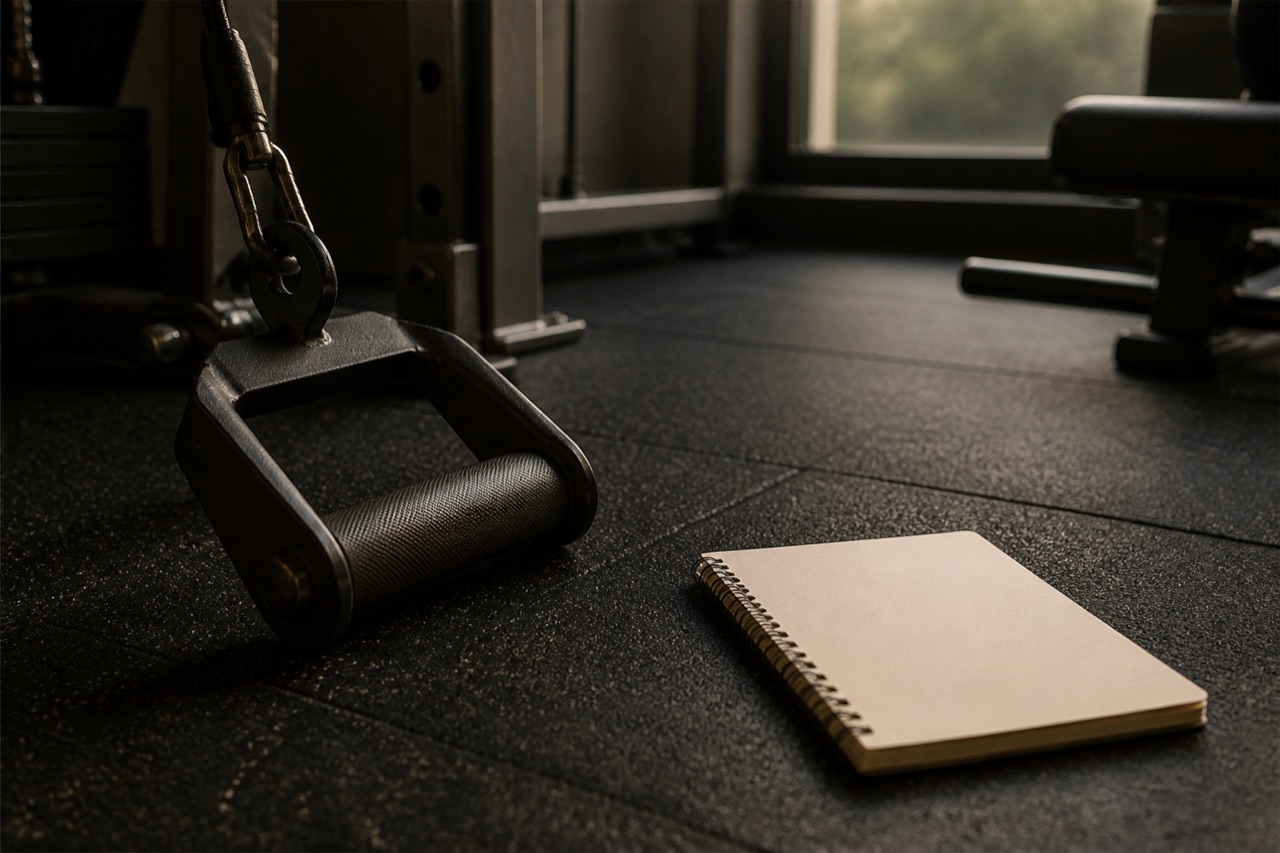
You walk into a gym that has a machine your exercise library has never heard of. Or you have twenty minutes and no patience for today's scheduled upper day. Or you hate that missing Wednesday quietly reshuffles Thursday without asking. Most apps answer with a shrug, a forced template, or an auto-schedule you cannot refuse.
This Pocket Fit update is the general catch-all for those edges: custom exercises you own, empty freestyle / adhoc workouts, an auto-scheduling setting you can turn off, added exercises seeded from your last performance, rest-timer and keep-awake behaviour that respects a real session, and quieter Health prompts when Apple Health is involved. Food and social each get their own posts - food update and social update - so this one stays on training control.
Our bias, stated first
We make Pocket Fit. These features exist to make the app harder to abandon, which is also how we stay in business. Read accordingly.
We will cite progressive overload research where it earns its place. We will not pretend a rest-timer chime is a peer-reviewed intervention.
The short answer
Update for this build if you need movements that are not in the catalogue, days that start without a programme, or control over whether missed sessions get reshuffled.
Read the food and social posts if your bottleneck is the diary or borrowing a friend's plan. This article is the training-control slice.
Custom exercises: your machine, your name
Catalogue libraries are large and still incomplete. Hotels, indie gyms and home racks invent hardware every year. Custom exercises let you define movements you own - type, equipment, target area - so the log matches the floor you stand on.
That matters for progressive overload. If you log "cable thing" as a random substitute every week, the chart lies. A named custom movement becomes a line you can progress. For the broader "who decides the next weight" comparison, see progressive overload apps and the rule essay reps first, then weight.
Freestyle when the plan is wrong for the day
Not every good session starts as a scheduled workout. We added an empty freestyle / adhoc path so you can start without a plan, log what you did, and still feed Body budget.
Use it when:
- The scheduled day no longer matches your energy or equipment
- You are travelling and improvising
- You want to test a custom exercise before promoting it into the programme
Freestyle is not a replacement for a programme week. It is an escape hatch that still counts. If you want the "session generator versus programme engine" framing, Pocket Fit vs Fitbod is the longer argument.
Auto-scheduling you can refuse
Pocket Fit's scheduler can reshuffle a missed session into the rest of the week. That is a feature when life is noisy. It is a bug when you wanted the miss to stay a miss - deload, illness, or a deliberate rest.
You can now toggle auto-scheduling in settings. On means the week still tries to heal. Off means a missed day stays missed until you move it yourself. Consent beats cleverness.
Small session truths that add up
A few quieter changes belong here because they are not food and not social:
- Added exercises seed from your last performance when the data exists, instead of only a formula guess
- Rest timer / keep-awake / lock-screen chime behaviour so the phone does not sabotage a set
- HealthKit sleep and quieter Health prompts so Apple Health is less nag, more signal - related reading: turn Apple Health sleep into tomorrow's session
- Finish-session reminders when a workout is still running hours later
- Pilates and broader activities counting toward Body budget and movement streaks when you log them
None of these is a launch-day keynote. Together they are why a Tuesday session feels less fragile.
What the evidence supports: progression needs a stable unit
Schoenfeld, Ogborn and Krieger reviewed weekly set volume and hypertrophy for Sports Medicine and reinforced that volume is a primary driver within recoverable ranges - which only helps if the sets you count are the sets you meant. Custom naming and freestyle logging are product answers to "stop losing the unit of progression."
Plotkin and colleagues discussed autoregulation and progression models in practical strength literature; the shared theme is that the rule only works when the exercise identity is stable enough to carry week to week. A custom cable row that keeps its name beats three differently labelled substitutes.
We are not claiming Pocket Fit's custom-exercise UI was in those papers. We are claiming the papers explain why the UI is worth shipping.
Where our claims run thin
- Custom exercises depend on you naming and loading them honestly. Garbage in still charts.
- Freestyle can become a permanent detour from the programme if you never return to scheduled work.
- Auto-scheduling off means you own the calendar again - including the guilt of an empty Thursday.
- Sleep and Health integrations vary by OS permission and device; we cannot promise perfect HealthKit behaviour in every iOS version.
- This post is a product digest, not an independent audit of every OTA since spring.
What to change this week
- Create one custom exercise for a machine your catalogue lacks
- Run one freestyle session on a messy day, then decide whether to keep any movements
- Check the auto-scheduling toggle and set it to match how you actually live
- If food or friends are the real bottleneck, jump to the food or social update instead
Put it together
General updates are where trust lives: your movements, your empty start, your consent on reshuffles, your last performance as the seed for the next add. Body budget still tallies training, streak, sleep and nutrition. Fuel still logs food. The AI coach and scheduler still rebuild a week - when you allow them.
Georgi went from 122 kg to winning first place at The Yard Games after losing 38 kg. The app is for the weeks that do not match the template. That story is on our story.
Pocket Fit update 2026: common questions
Will custom exercises sync across my devices?
They are owned by your account in the product model. Sign in on the device you train with and confirm the exercise appears before you rely on it for a meet week.
Is freestyle the same as Fitbod-style daily generation?
No. Freestyle is an empty start you fill. Fitbod-class products generate a session for you. See Pocket Fit vs Fitbod for the programme-versus-session split.
What happens if I turn auto-scheduling off?
Missed sessions stay where they are until you move them. The app will not quietly rebuild the week on your behalf.
Does this replace the distance and time tracking launch post?
No. Distance and time tracking remains covered in exercise tracking for distance and time. This post is the later control-layer update.
Where do food and social changes live?
In their own posts so this one stays readable: food update and social update.
References
- Schoenfeld BJ, Ogborn D, Krieger JW. (2017). Dose-response relationship between weekly resistance training volume and increases in muscle mass: A systematic review and meta-analysis. Journal of Sports Sciences, 35(11), 1073-1082. DOI: 10.1080/02640414.2016.1210197
- Plotkin D, Coleman M, Van Every D, et al. (2022). Progressive overload without progressing load? The effects of load or repetition progression on muscular adaptations. PeerJ, 10, e14142. DOI: 10.7717/peerj.14142
Pocket Fit is a fitness and wellbeing app, not a medical device. It does not diagnose, treat or prevent any condition. Always consult a qualified healthcare professional before starting or changing a training or nutrition programme, and if you have persistent problems with sleep, pain or fatigue. Georgi, founder of Pocket Fit. He went from 122 kg to winning first place at The Yard Games, having lost 38 kg along the way.
Related articles
Train smarter with Pocket Fit
Download the app