Pocket Fit vs Cronometer: micronutrient depth or training and food in one place
Cronometer wins when you care about magnesium and the USDA-backed food database. Pocket Fit wins when the reason you track is protein next to a programme that has to survive Wednesday.
11 min readUpdated September 2026
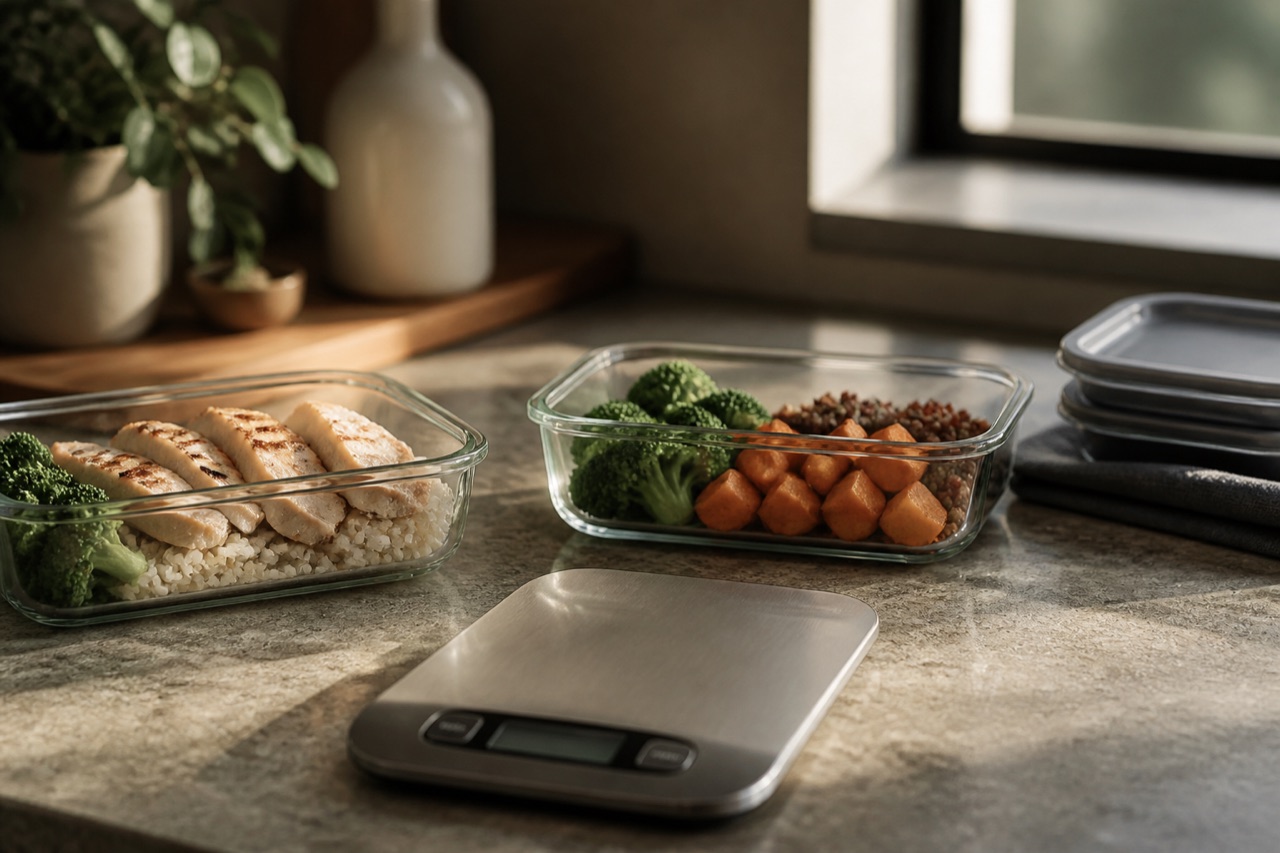
You open a food tracker because you want the numbers to be right. Cronometer has spent years becoming the answer to that wish: lab-sourced entries, eighty-odd micronutrients, a barcode scanner that is not locked behind a paywall. Pocket Fit is the other kind of answer - a training app with a nutrition tool called Fuel - and the shortlist only looks fair if you pretend those are the same job.
The reasonable assumption is that the more accurate food database wins. It does, when accuracy is the binding constraint. More often, lifters keep a calorie app and a gym app side by side until week ten kills the log. For the wider food map, start with best food tracking app; for free tiers, see free calorie counter apps.
Our bias, stated first
We make Pocket Fit. This article exists partly to sell it, so read every sentence about us as a claim from an interested party.
What we can also do is make it checkable. Every factual claim about Cronometer comes from its own website, help material or store listing pattern we have already checked in our free-tier writing, with sources at the end. Every claim about Pocket Fit comes from our product and our pricing page. Where a company does not publish something, we say so.
One honesty tax paid up front. Cronometer is the serious micronutrient tracker in this category, and for a lot of people that single fact settles the decision. If you need to know whether you are short on magnesium, iron or sodium, and you want a food database drawn from lab-analysed sources including the USDA's, Cronometer will tell you things we will not. We will say that again because a comparison that never concedes anything is an advert with footnotes.
The short answer
Cronometer and Pocket Fit are not competing for the same job, which is why feature lists side by side feel slippery.
Cronometer is a nutrition diary built around accuracy and micronutrients. Its free Basic account already reports on 82 micronutrients, keeps barcode scanning unlocked, and draws on lab-analysed food data. Pocket Fit is a gym programme engine with Fuel for protein, carbohydrate and fat, built around a different bet: that most lifters' logging problem is friction and separation from training, not vitamin depth.
Choose Cronometer if micronutrient depth and database seriousness are your binding constraints, and you are happy to programme training elsewhere.
Choose Pocket Fit if you lift or want a multi-week programme, if the reason you track is protein on a cut or fuelling on a heavy leg day, and if you want food and training in one place.
Use both only if you accept the admin. A periodic Cronometer audit plus a daily training-app log works for some people; for most it is a phase.
Pocket Fit vs Cronometer side by side
Everything in this table comes from each company's own published material or from our product as of the date we last checked. Prices vary by region and promotion - verify before you pay.
Cronometer: the gold standard food diary, and where it stops
Cronometer's free Basic account is the strongest free nutrition tier we have written about, and it is not close.
What it genuinely does well. You get the full food database, drawn from lab-analysed sources including the USDA's, and the tracker reports on 82 micronutrients rather than just protein, carbs and fat. If you actually want to know whether you are short on magnesium or getting too much sodium, nothing in the casual calorie-counter lane will tell you as cleanly. Cronometer's own words on barcode scanning: all users have access. That matters, because barcode scanning is the difference between logging a packaged food in a few seconds and hunting it in a search box.
Gold removes adverts and unlocks longer reporting windows - free reports only look back seven days. Check Cronometer Gold and the App Store for live pricing.
Where it stops for a lifter. Cronometer is not a training programme app. It will not give you a dated week, a progression rule, a scheduler, or food held against the session you skipped. It can show protein; it cannot hold the plan that was supposed to raise the load.
Ideal user. Someone who cares about nutrition data quality, already has training elsewhere, and will pay Gold if the seven-day window breaks the product.
Pocket Fit Fuel: built for seconds next to training, not for eighty micronutrients
Fuel tracks protein, carbohydrate and fat with photo, barcode, search and templates, and no red numbers. We are not trying to win on micronutrient breadth. We are trying to keep logging cheap for people who also train: generic-first staples, meal templates for repeats, targets from your programme profile, and no shame language when you go over.
The Body budget keeps one tally across workout, streak, sleep and nutrition, so a heavy leg day and a rest day are not handed the same number. On a cut, that intersection is where fat loss without muscle loss is won or lost - see calorie deficit and strength training.
The programme half is a dated multi-week plan, a published progression rule (reps first, weight only off a confirmed plateau), a scheduler for missed sessions, and an AI coach that rebuilds one from a sentence. Food is bundled with membership for a limited launch period - check pricing.
What the evidence says: adherence is the dose, protein is the lever
Tracking has a dose: days logged. Anything that raises the cost of an entry lowers the dose, however good the micronutrient panel.
Burke, Wang and Sevick reviewed 22 studies for the Journal of the American Dietetic Association and found a consistent link between dietary self-monitoring and weight loss, while calling the evidence methodologically weak. Turner-McGrievy and colleagues analysed two six-month mobile trials (124 adults) in the Journal of the Academy of Nutrition and Dietetics: fewer than half were still tracking after week 10, and days logging at least two eating occasions explained the most variance in weight loss. Friction is how tracking fails.
Protein is why lifters care. Longland and colleagues found higher protein (2.4 g/kg/day) in an energy deficit with training produced 1.2 kg lean mass gain versus 0.1 kg at 1.2 g/kg/day. Morton and colleagues, across 49 trials and 1,863 participants, found no further training-induced fat-free mass gains beyond about 1.62 g/kg/day. Separate food and gym apps make that target easy to miss.
Cronometer wins accuracy. Adherence next to training is why a combined product exists.
Where the evidence and our claims run thin
No head-to-head trial of Cronometer against Pocket Fit exists. Self-monitoring research supports tracking while people do it; it does not prove Fuel beats Cronometer for every diet. Micronutrient depth is Cronometer's clear published advantage. Seconds-per-entry next to training is our thesis, not a lab bake-off. We have not audited database accuracy ourselves. Gold pricing, report windows and our food bundle move - verify before you subscribe.
Who should buy which
Buy Cronometer if micronutrients and database seriousness are what you actually need, especially if you already have a training plan you trust. Start on free Basic; pay Gold if the seven-day report window is the thing that breaks the product for you.
Buy Pocket Fit if you lift, or want a programme, and the reason you track is protein on a cut, fuelling on hard training days, or keeping muscle while the weight comes off. Also buy it if you have run a food app and a gym app side by side and noticed they never talk.
Buy neither alone as a medical tool. Neither replaces clinical nutrition advice. If you have a diagnosed deficiency or a clinical diet, talk to a qualified professional first.
Do not buy Cronometer expecting it to programme your squats. Do not buy Pocket Fit expecting an eighty-micronutrient dashboard.
Put it together
Cronometer answers micronutrients better than we do. Pocket Fit answers the week: dated sessions, reps-first progression, a scheduler, an AI coach, Fuel, and a body budget across workouts, streak, sleep and nutrition.
The founder note: Georgi built Pocket Fit after going from 122 kg to winning first place at The Yard Games, having lost 38 kg along the way. He needed food and training together on the bad weeks, not a vitamin panel abandoned by week ten. That is our story.
Pocket Fit vs Cronometer: common questions
Is Pocket Fit better than Cronometer?
Neither is better in general. Cronometer wins on micronutrient depth and lab-sourced food data seriousness. Pocket Fit wins on keeping food next to a gym programme, on seconds per entry for repeat meals, and on design that does not shame you for going over. If your problem is nutritional completeness, Cronometer. If your problem is sticking with the log while you lift, Pocket Fit.
Does Cronometer have a free version?
Yes, and it is unusually strong. Free Basic includes the full database, barcode scanning for all users, and reports on 82 micronutrients. The main catches are adverts and a seven-day reporting window. Longer trends and an advert-free experience sit behind Gold.
How much does Cronometer Gold cost?
Cronometer has published Gold around $10.99 a month or $59.99 a year. Promotions and regions move that number, so check Cronometer's Gold page and your App Store before you pay. Pocket Fit is £9.99 a month or £59.99 a year on our pricing page, with food included for a limited launch period.
Can I use Pocket Fit and Cronometer together?
Yes, if you accept the overhead. The risk is duplication, inconsistency and simply stopping because two logs is twice the friction. Most people who need both should treat Cronometer as a periodic micronutrient audit and Pocket Fit as the daily training-plus-food log, not as two forever diaries.
Which is better for weight loss while lifting?
The app you still use in week ten beats the app with the deeper micronutrient panel you abandoned in week three. Both can support a cut if you log consistently and eat below your needs. Cronometer's advantage is knowing what you ate with unusual seriousness. Pocket Fit's advantage is holding protein beside a progressed programme so the cut does not quietly eat your muscle.
References
- Cronometer. What's Included Under The Free Account In Cronometer? cronometer.com/blog/free-features
- Cronometer. Cronometer Gold pricing and feature description. cronometer.com/gold
- Burke LE, Wang J, Sevick MA (2011). Self-monitoring in weight loss: a systematic review of the literature. Journal of the American Dietetic Association, 111(1), 92-102. DOI: 10.1016/j.jada.2010.10.008
- Turner-McGrievy GM, Dunn CG, Wilcox S, Boutté AK, Hutto B, Hoover A, Muth E (2019). Defining adherence to mobile dietary self-monitoring and assessing tracking over time. Journal of the Academy of Nutrition and Dietetics, 119(9), 1516-1524. DOI: 10.1016/j.jand.2019.03.012
- Longland TM, Oikawa SY, Mitchell CJ, Devries MC, Phillips SM (2016). Higher compared with lower dietary protein during an energy deficit combined with intense exercise promotes greater lean mass gain and fat mass loss: a randomized trial. American Journal of Clinical Nutrition, 103(3), 738-746. DOI: 10.3945/ajcn.115.119339
- Morton RW, Murphy KT, McKellar SR, Schoenfeld BJ, Henselmans M, Helms E, Aragon AA, Devries MC, Banfield L, Krieger JW, Phillips SM (2018). A systematic review, meta-analysis and meta-regression of the effect of protein supplementation on resistance training-induced gains in muscle mass and strength in healthy adults. British Journal of Sports Medicine, 52(6), 376-384. DOI: 10.1136/bjsports-2017-097608
- Apple App Store. Pocket Fit (Pocket Fit), listing, checked 2026. apps.apple.com
- Pocket Fit pricing, as published on pocket-fit.app/pricing
- Pocket Fit. Best food tracking app hub comparison. pocket-fit.app/blog/best-food-tracking-app-pocket-fit-vs-myfitnesspal-cal-ai-macrofactor
Pocket Fit is a fitness and wellbeing app, not a medical device. It does not diagnose, treat or prevent any condition. Always consult a qualified healthcare professional before starting or changing a training or nutrition programme, and if you have persistent problems with sleep, pain or fatigue. Georgi, founder of Pocket Fit. He went from 122 kg to winning first place at The Yard Games, having lost 38 kg along the way.
Related articles
Free tools
Train smarter with Pocket Fit
Download the app