Pocket Fit vs Lose It: training plus Fuel, or a pure calorie counter
Lose It is a long-running calorie logger with a generous free diary and Premium that now sits near the top of the category on price. Pocket Fit costs for a different job: a strength programme with Fuel attached, not another calorie brand.
12 min read
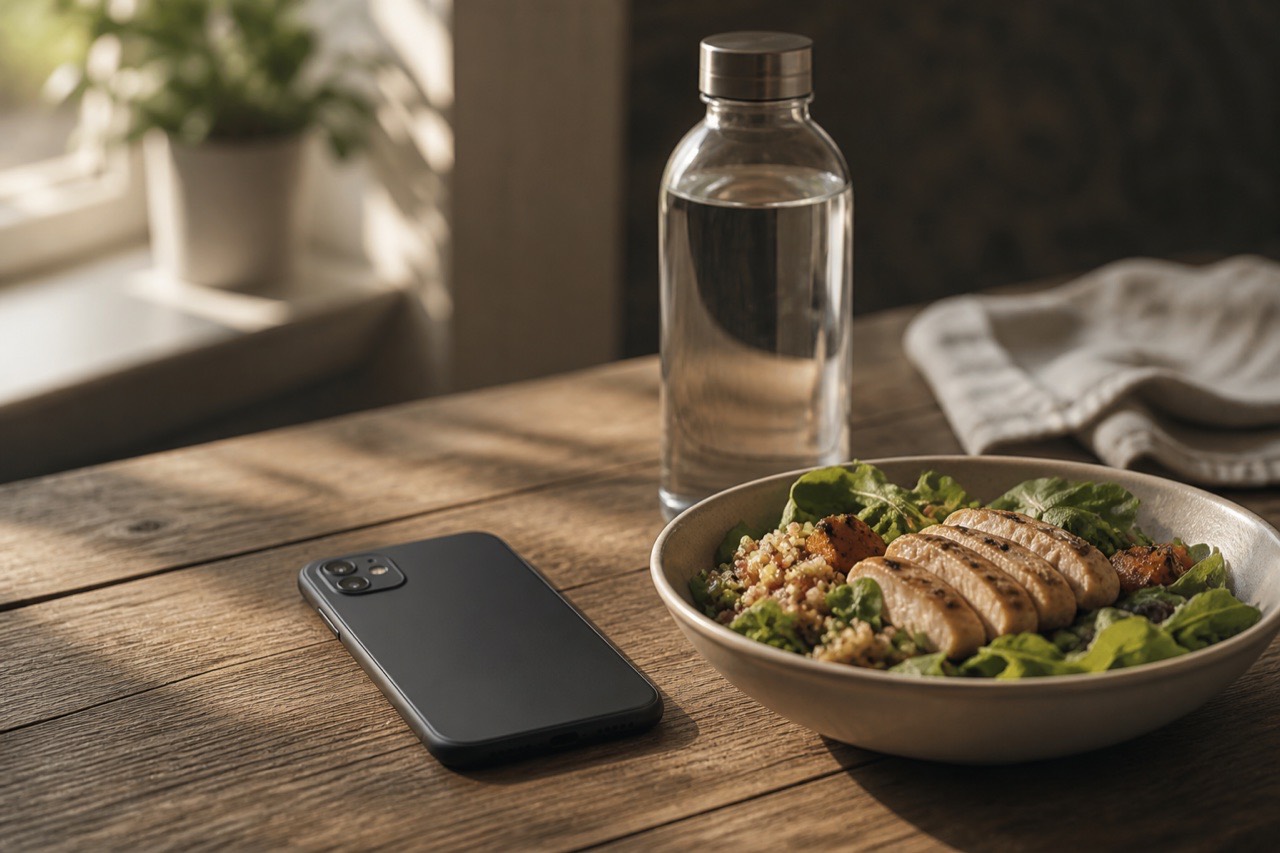
You already know Lose It as the cleaner calorie counter people recommend when they are tired of MyFitnessPal's gravity. Premium on Lose It's own support page is $79.99 a year (raised from the older $39.99 band), with a Lifetime option also published. Pocket Fit is the thing that also programmes your week and logs food under Fuel. The shortlist only looks fair if you pretend those are the same purchase.
The reasonable assumption is that you pick the cheaper calorie app - or the one with the simpler diary - and get on with logging. Fine if food is the whole problem. It fails if you need a dated gym programme next to protein. For Lose It versus the market leader, read Lose It vs MyFitnessPal first. For the wider food map, start with best food tracking app; our MyFitnessPal food head to head is Pocket Fit vs MyFitnessPal.
Our bias, stated first
We make Pocket Fit. This article exists partly to sell it, so read every sentence about us as a claim from an interested party.
What we can also do is make it checkable. Every factual claim about Lose It comes from its own support pages or store listing pattern, with sources at the end. Every claim about Pocket Fit comes from our product and our pricing page. Where a company does not publish something, we say so. Verify live App Store or Google Play pricing before you pay - Lose It Premium and Lifetime SKUs can differ by region and promotion.
Honesty tax: Lose It is a serious calorie counter with a free tier that already does basic logging, and for a lot of people that single fact settles the decision. If all you want is a food diary, Lose It (or MyFitnessPal) is often the right purchase, not us. We will say that again because a comparison that never concedes anything is an advert with footnotes.
The short answer
Lose It and Pocket Fit are not competing for the same job, which is why feature lists side by side feel slippery.
Lose It is a calorie and weight-loss diary. Its free Basic tier covers a calorie budget and food logging; Premium unlocks faster paths and deeper tools at $79.99 a year on Lose It's published US support page, with Lifetime as a one-time unlock. Pocket Fit is a training app with Fuel for protein, carbohydrate and fat, built around a different bet: that most lifters' problem is the week - sessions, progression, missed days - not finding another calorie counter.
Choose Lose It if food logging is the whole job, you want a generous free calorie diary, and you may pay Premium or Lifetime for barcode, photo, voice and advanced tools.
Choose Pocket Fit if you lift or want a multi-week programme, if the reason you track is protein on a cut or fuelling on a heavy leg day, and if you want food and training in one place.
Use Lose It alongside a gym app only if you accept the admin. Two apps work for a phase; for most people the second app dies first.
Pocket Fit vs Lose It side by side
Everything in this table comes from Lose It's published membership page or from our product as of the date we last checked. Prices move.
Prices are published differently by region. Read the last row as product shape, not an exchange-rate comparison.
Lose It: the calorie counter that stayed simpler
Lose It's job is to log food and manage a calorie budget without turning the diary into a social network. Free Basic covers the core calorie counter experience many people never leave. Premium, per Lose It's own membership tiers page, is $79.99 USD per year auto-renewing - a rise from the older $39.99 annual band that older reviews still quote. Lifetime is a one-time purchase (Lose It publishes standard and active-Premium member rates on that same page - confirm the figure on your account).
Premium is where barcode, photo, voice and other convenience tools typically sit for people who live on packaged food. That pattern matches the wider category: free diaries slow down when the fast path is paid. For the Lose It versus MyFitnessPal detail, including who wins on feel versus catalogue, see Lose It vs MyFitnessPal.
Three limits, stated as fairly as we can.
It assumes food is the problem. Lose It does not owe you "what should this training week look like". If the blank gym calendar is why the cut stalls, the calorie counter cannot invent the sessions.
Premium pricing is no longer the budget story. At $79.99 a year on the published US support page, Lose It Premium sits in the same annual band people associate with MyFitnessPal Premium. The free tier remains the value argument; Lifetime is the long-horizon argument - verify both.
Database size is still not adherence. A large food log helps on hard lookups. Turner-McGrievy and colleagues showed mobile trackers still lose many users by week ten. The diary you abandon does not get credit for Premium features you never used.
Pocket Fit: a programme engine with Fuel, not a Lose It clone
Ours works the other way round. The programme comes first and food is an input to the same picture of you.
A scheduled multi-week programme. Goal, days, difficulty, equipment, split and injuries become a dated week of sessions with written reasons. You read it before your first set; it updates from what you log.
A progression rule you can read. Reps first inside the range, then the smallest weight increment, and only off a confirmed plateau - two misses, not one.
Fuel. Scan a plate or barcode for protein, carbs and fat - aimed at seconds per entry and adherence next to training, not at beating Lose It or MyFitnessPal on catalogue scale. Related: Pocket Fit vs Cal AI, Pocket Fit vs Cronometer.
The scheduler, the AI coach and the body budget. A missed session is reshuffled into the week. One sentence to the AI coach rebuilds a session from the same rules. The body budget tallies workout, streak, sleep and nutrition so a stall can be read as under-eating or under-sleeping rather than as failure to open a calorie app.
Already happy with Lose It for food? Keep it - and accept two apps - or move protein logging into Fuel when the gym week is the thing that keeps breaking. Free tiers and Premium gates across the category: free calorie counter apps. Adaptive macro coaching without a programme: MacroFactor vs MyFitnessPal.
What the evidence says: the diary only works while you keep it
Burke, Wang and Sevick reviewed 22 studies for the Journal of the American Dietetic Association and found a consistent association between dietary self-monitoring and weight loss, while calling the evidence weak on methodology. Lose It sits cleanly on that finding. We will not pretend a calorie diary is worthless.
Turner-McGrievy and colleagues analysed two six-month mobile trials (N=124) and found fewer than half still tracking after week 10, with days logging at least two eating occasions explaining the most variance in weight loss. Database size and Premium SKUs do not rescue an abandoned log.
For lifters, protein is the other number. Longland and colleagues found higher protein in an energy deficit with training produced meaningful lean-mass differences; Morton and colleagues' meta-analysis of 49 trials put a practical ceiling near 1.62 g/kg/day. Lose It can log that protein. It does not programme the bar the protein is supposed to protect. That is the Pocket Fit claim - training dose plus Fuel - not "we beat Lose It at being a calorie counter".
Where the evidence and our claims run thin
No head-to-head RCT of Pocket Fit versus Lose It. Feature comparisons are product journalism, not clinical proof.
Lose It's free calorie logging is a real advantage for people who only need a diary. Our programme engine does not erase that.
We are not trying to win on food-database scale. MyFitnessPal still leads that race on published figures; Lose It competes in the calorie-counter lane. Our thesis is seconds per entry next to training, not catalogue ceiling.
Prices move. Lose It Premium at $79.99/yr and Lifetime figures on the support page can differ from your store. Pocket Fit membership is on pocket-fit.app/pricing. Check before you pay.
Our pitch flatters us when your only job is logging brunch. If you do not train, buy a calorie counter.
Who should buy which
Buy Lose It if you want a pure calorie counter, the free Basic diary is enough to start, and Premium at $79.99 a year or Lifetime is the convenience unlock you actually want. Prefer MyFitnessPal instead if catalogue breadth is the binding constraint - see Lose It vs MyFitnessPal.
Buy Pocket Fit if training fails at the calendar, and you want a multi-week programme you can read, a scheduler for missed days, an AI coach, Fuel, and a body budget so food and sessions share one picture of you.
Buy both only briefly if you are migrating. Two food surfaces usually collapses to one.
Put it together
Lose It hands back a calorie diary - generous on free, Premium and Lifetime when you want speed. Pocket Fit hands back a week: dated sessions, progression you can argue with, a scheduler for missed Wednesdays, an AI coach that rebuilds from one sentence, Fuel, and a body budget across workout, streak, sleep and nutrition.
The founder note, because it explains the design. Georgi built Pocket Fit after going from 122 kg to winning first place at The Yard Games, having lost 38 kg along the way. The app is not shaped by the good weeks. It is shaped by the bad ones - the missed sessions and the under-eaten training days. That is our story, and why Fuel sits next to the programme instead of pretending to be another Lose It.
Pocket Fit vs Lose It: common questions
Is Pocket Fit better than Lose It?
Neither is better in general, because they produce different things. Lose It is a calorie counter with generous free logging and Premium at $79.99 a year on its published US support page. Pocket Fit is a programme engine with Fuel. If food is the whole job, Lose It. If the blank training week is the problem, us.
Is Lose It free?
Basic calorie logging is free. Premium is $79.99 USD per year auto-renewing on Lose It's membership page, with Lifetime as a one-time option. Confirm the SKU on your store. Pocket Fit is free to start; membership on pocket-fit.app/pricing.
Does Lose It build a workout programme for me?
No. Lose It records food and weight-loss related tracking. There is no adaptive gym scheduler and no published overload engine inside the app. That is why it is a calorie counter, and why people who need programming look elsewhere.
Which is better if I only want to count calories?
Lose It. Buy Pocket Fit for the programme, the scheduler and Fuel next to training - not to beat a dedicated calorie counter at being a dedicated calorie counter.
Which app is better if I want to lose fat and keep lifting?
That is the case for Pocket Fit when the gym week keeps collapsing. Protein research supports higher protein in a deficit with training, but the dose of training still has to happen. Our scheduler protects the week; Fuel keeps protein visible beside it. If you will not lift, Lose It's diary is the simpler tool.
References
- Lose It! Support. Membership Tiers & Pricing (Premium $79.99 USD/year and Lifetime options as published). loseit.zendesk.com
- Apple App Store. Lose It! - Calorie Counter. apps.apple.com
- Burke LE, Wang J, Sevick MA (2011). Self-monitoring in weight loss: a systematic review of the literature. Journal of the American Dietetic Association, 111(1), 92-102. DOI: 10.1016/j.jada.2010.10.008
- Turner-McGrievy GM, Dunn CG, Wilcox S, Boutté AK, Hutto B, Hoover A, Muth E (2019). Defining adherence to mobile dietary self-monitoring and assessing tracking over time. Journal of the Academy of Nutrition and Dietetics, 119(9), 1516-1524. DOI: 10.1016/j.jand.2019.03.012
- Longland TM, Oikawa SY, Mitchell CJ, Devries MC, Phillips SM (2016). Higher compared with lower dietary protein during an energy deficit combined with intense exercise promotes greater lean mass gain and fat mass loss: a randomized trial. American Journal of Clinical Nutrition, 103(3), 738-746. DOI: 10.3945/ajcn.115.119339
- Morton RW et al. (2018). Protein supplementation meta-analysis. British Journal of Sports Medicine, 52(6), 376-384. DOI: 10.1136/bjsports-2017-097608
- Apple App Store. Pocket Fit (Pocket Fit), listing. apps.apple.com/gb/app/pocket-squats/id6748518785
- Pocket Fit pricing. pocket-fit.app/pricing
- Pocket Fit. Best food tracking app hub. pocket-fit.app/blog/best-food-tracking-app-pocket-fit-vs-myfitnesspal-cal-ai-macrofactor
Pocket Fit is a fitness and wellbeing app, not a medical device. It does not diagnose, treat or prevent any condition. Always consult a qualified healthcare professional before starting or changing a training or nutrition programme, and if you have persistent problems with sleep, pain or fatigue. Georgi, founder of Pocket Fit. He went from 122 kg to winning first place at The Yard Games, having lost 38 kg along the way.
Related articles
Free tools
Train smarter with Pocket Fit
Download the app