MacroFactor vs MyFitnessPal: algorithm coaching or the biggest database
MacroFactor wins on the expenditure algorithm. MyFitnessPal wins on catalogue size. They solve different problems, and price and free tiers make that clearer still.
11 min readUpdated August 2026
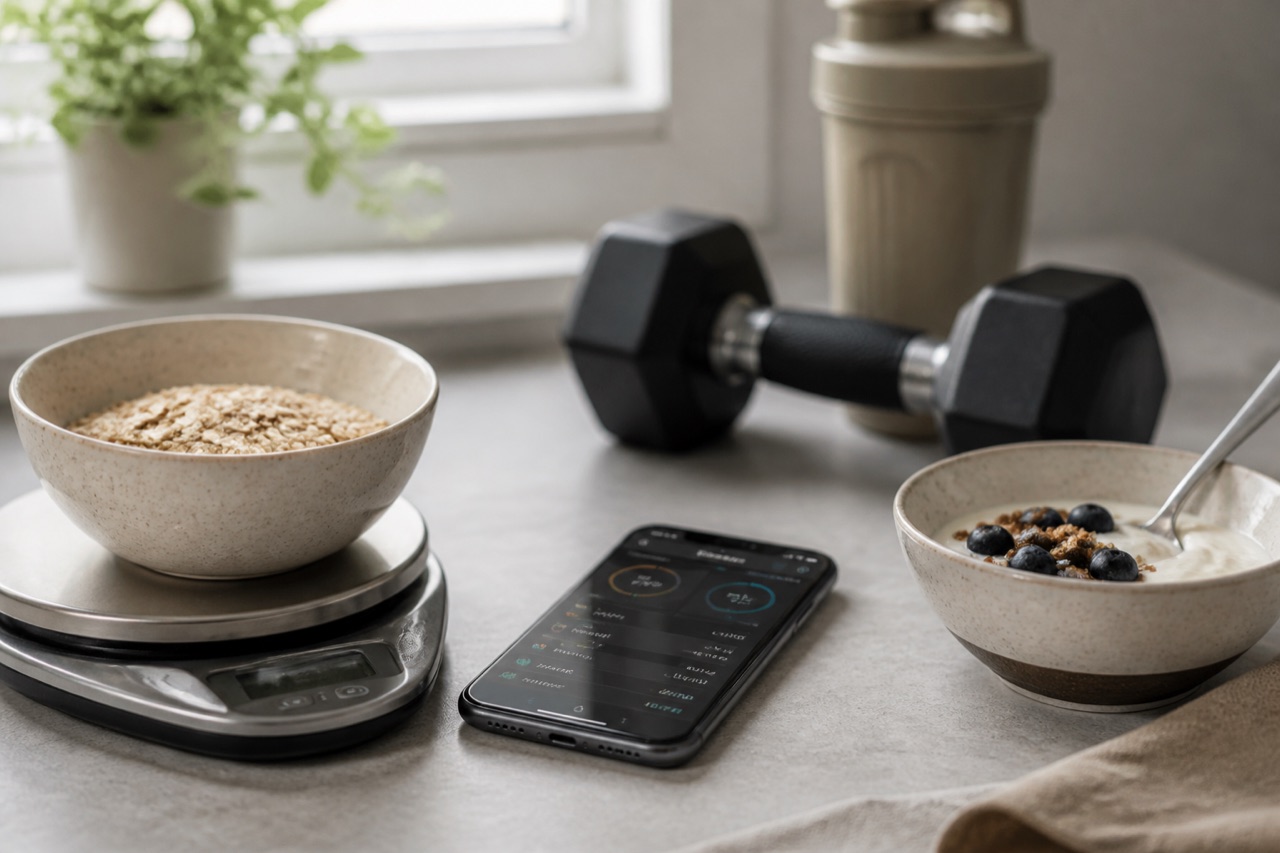
You set the calculator to 2,200 calories. You ate 2,200 calories, or close enough. The scale did not move for two weeks, so you cut to 2,000. Still nothing. So you cut again, and now you are tired, hungry, and wondering whether your metabolism is broken or whether the app is lying to you.
The reasonable assumption is that one of these two apps is simply better. The more useful framing is that they answer different questions. MyFitnessPal is built to find food. MacroFactor is built to tell you what your calories should be next week once the food is logged. Most people in this comparison are stuck between lookup friction and target drift, and those are not the same problem.
For the six-app version with the evidence chapters, read our best food tracking app comparison first. This article is the narrow head to head.
Our bias, stated first
We make Pocket Fit. Pocket Fit is not in the ranked comparison below. It appears once near the end in a section you can skip, and the verdict recommends one of these two outright.
Everything factual about MacroFactor and MyFitnessPal here comes from those two companies' own websites, help centres and App Store listings, checked in August 2026. Prices move constantly and differ by region, so check the store before you pay.
One honesty tax paid up front. MyFitnessPal's food database is vastly larger than MacroFactor's, and for a lot of people that single fact settles the decision. MacroFactor's expenditure algorithm is more sophisticated than anything MyFitnessPal publishes. We will say both again below.
The short answer
MacroFactor and MyFitnessPal are not competing for the same job, which is why feature lists side by side feel slippery.
MyFitnessPal is a calorie counter with the largest published catalogue in the category. Its own blog states over 20.5 million foods, and for obscure branded, regional and restaurant items it is still the default. MacroFactor is a nutrition coach built around an adaptive expenditure algorithm. It adjusts calorie and macro targets from your logged intake and weight trend, not from a static formula you set once.
Choose MacroFactor if your problem is target drift: you followed the number and the scale stopped cooperating.
Choose MyFitnessPal if your problem is lookup: half your diet is packaged food and restaurant meals that smaller databases miss.
MacroFactor vs MyFitnessPal side by side
Everything in this table comes from each company's own website, help documentation or store listing, checked in August 2026.
Every figure here is the vendor's own published number as of August 2026. Prices vary by region and storefront.
MacroFactor: the expenditure algorithm is the product
MacroFactor's marketing is unusually honest about what it is selling. The expenditure algorithm is not a sidebar feature. It is the coaching engine.
MacroFactor describes your estimated energy expenditure as a deterministic calculation based on calorie intake and change in trend weight. As you keep logging, the app monitors intake and weight to update that estimate. If your weight or activity changes substantially, MacroFactor says it measures the impact rather than guessing from a static formula.
That is a different promise from a one-time TDEE calculator. Static formulas hand you a number and leave you to interpret a noisy scale. MacroFactor's model is built to self-correct when reality diverges, which is the failure mode that drives people to this comparison.
The company has iterated publicly. Version 3, on MacroFactor's own site, is described as more responsive, stable and resilient to missing data than earlier versions. We have not independently validated that. What matters for a buyer is the shape: targets move because your data moved.
Around that engine sits a food logger good enough to feed the model, not a catalogue built to win lookup breadth. MacroFactor states more than 1.36 million verified food entries. That is real, but an order of magnitude smaller than MyFitnessPal's published figure. Barcode scanning, label scanning, MacroFactor AI photo logging, speech to text and custom foods are all there, because the algorithm only works if intake is logged consistently.
MacroFactor's help documentation is blunt about the weak point: partial nutrition tracking. If you log breakfast and lunch but skip dinner, the app cannot know intake is incomplete, and your estimated expenditure will fall. This app rewards completeness more than most.
The coaching layer shapes daily use too. MacroFactor advertises weekly macro adjustments, a weight trend insight to cut through daily noise, and no red numbers or shaming when you exceed targets. The company says the algorithms still function if you deviate from targets. Whether that tone helps you adhere is personal. The design choice is clear.
MacroFactor Workouts exists as a separate bundle, but this comparison is about food and coaching. If you want training and nutrition in one place, that is a different shortlist. See Pocket Fit vs MyFitnessPal for that angle.
MyFitnessPal: the database everyone else is measured against
MyFitnessPal still sets the category on catalogue size. Its own blog puts the figure above 20.5 million foods. For branded items, regional products, restaurant dishes and odd barcodes, that breadth is still the strongest argument in food tracking.
The trade is search friction on repeat staples. MyFitnessPal's database is largely member-built. The company publishes a provenance taxonomy for dietitian-verified entries versus unreviewed submissions, which is more transparency than most competitors offer. It does not remove the friction of choosing between four near-identical porridge entries with different calorie counts.
The fastest logging paths sit behind Premium. MyFitnessPal's help centre states that as of 1 October 2022, barcode scan is Premium only. Meal Scan and voice logging are Premium too. The free tier still works for manual search, with adverts and without gram-precise macro goals on the free plan per the company's feature split.
That October 2022 change still matters because barcode scanning was what made MyFitnessPal feel effortless for a decade. Free users can search. They cannot scan a label in three seconds. If your diet is mostly packaged food, the free tier is a different product from the one you remember.
What MyFitnessPal does not publish is an adaptive expenditure model comparable to MacroFactor's. You can set goals, adjust them yourself, and chart weight. The app will not, on its own published feature set, infer expenditure from intake and trend weight and rewrite targets weekly. For people whose problem is lookup, that gap is irrelevant. For people whose problem is "I followed the number and the scale disagreed", it is the whole argument.
Free tiers, and what you actually pay
"Free" means opposite things across these two apps.
MacroFactor has no free tier. Its store listing states that MacroFactor has a free trial but does not offer a free version, and the company's public messaging has been explicit that there will never be one. You trial, then subscribe or lose access.
At the time of writing, MacroFactor's App Store listing shows $11.99 per month, $47.99 per half year and $71.99 per year, equal to $5.99 per month on the annual plan. MacroFactor also sells a Workouts bundle at a higher annual price.
MyFitnessPal still has a usable free tier for manual logging against a very large database, with adverts. Barcode scan, Meal Scan, voice logging, an advert-free experience and gram-precise macro targets are Premium per the company's documentation. Premium is listed at $79.99 per year or $19.99 per month at the time of writing.
So the price story is not "MacroFactor costs money and MyFitnessPal is free". MacroFactor charges for coaching intelligence with no permanent free option. MyFitnessPal charges for fast paths through a database you can still access slowly for free. On published US annual pricing, MacroFactor's yearly plan is slightly cheaper than MyFitnessPal Premium while offering target adaptation MyFitnessPal does not publish. MyFitnessPal gives you more catalogue. MacroFactor gives you more coaching maths.
For the wider map of what "free" means across Cronometer, FatSecret and the rest, read free calorie counter apps: what you actually get.
Where the evidence and our claims run thin
MacroFactor's expenditure algorithm is a product claim with a real engineering story behind it, not a peer-reviewed guarantee that every user will hit their goal. MyFitnessPal's database size advantage is real and settles the decision for branded-heavy diets. We sell Pocket Fit, so read every "choose us" sentence as interested. Prices and Premium gates change; check each store before you pay.
Who should buy which
Buy MacroFactor if the scale keeps disagreeing with your calculator. If you have cut twice because the trend stalled and suspect your expenditure estimate is wrong, MacroFactor is built for that loop. You need consistent logging, regular weigh-ins, and no partial days where dinner never enters the log.
Buy MyFitnessPal if lookup breadth is your binding constraint. If your diet is mostly packaging, restaurant menus and regional brands, MyFitnessPal's published catalogue is still the benchmark. Pay for Premium if barcode scan and Meal Scan are how you actually log. The free tier works for manual search, but it is not the fast MyFitnessPal you remember.
Do not buy MacroFactor expecting the largest food database. Do not buy MyFitnessPal expecting weekly expenditure coaching from trend weight. Those mismatches produce refund requests.
Do not buy either if your problem is sticking with the log rather than finding food or tuning calories. Friction kills adherence faster than algorithm quality.
Where a third option comes in
Skip this section if you have decided. We make Pocket Fit and this is the part where we are selling something.
Pocket Fit exists for people whose logging problem is friction and context, not catalogue size or expenditure modelling. Fuel is built around photo, barcode and template logging aimed at seconds per entry, with no red numbers and no shame language, and it sits beside your training programme in one app. That is a different bet from MacroFactor's algorithm coaching and MyFitnessPal's database breadth. If your problem is purely "find this obscure branded item", MyFitnessPal is still the better buy than us.
MacroFactor vs MyFitnessPal: common questions
Is MacroFactor better than MyFitnessPal?
Neither is better in general because they solve different problems. MacroFactor is better if your calories need to adapt from logged intake and weight trend. MyFitnessPal is better if you need the largest published food catalogue and Premium barcode scan for branded food. MyFitnessPal's free manual search costs nothing to test. MacroFactor only offers a trial before subscription.
Does MacroFactor have a free version?
No. MacroFactor's store listing and public messaging state there is no free version and will not be one. You can trial with full access, then subscribe or lose access.
Is MyFitnessPal barcode scanning still free?
No. MyFitnessPal's help centre states that as of 1 October 2022, barcode scan is Premium only. Free users can still search manually. Meal Scan and voice logging are Premium too.
Which has the bigger food database, MacroFactor or MyFitnessPal?
MyFitnessPal, by a wide margin on published figures. MacroFactor states more than 1.36 million verified entries. MyFitnessPal's blog states over 20.5 million foods.
Is MacroFactor worth the price compared to MyFitnessPal Premium?
It depends which problem you are paying to solve. On published US annual pricing, MacroFactor's yearly plan is slightly cheaper than MyFitnessPal Premium while offering adaptive coaching MyFitnessPal does not publish. MyFitnessPal Premium is worth more if barcode scan and catalogue breadth are what you use daily. Neither is worth much if you will not log consistently.
References
- MacroFactor. Expenditure algorithm overview. help.macrofactorapp.com/dashboard/expenditure
- MacroFactor. V3 expenditure algorithm announcement. macrofactor.com/expenditure-v3
- Apple App Store. MacroFactor - Macro Tracker, subscription pricing and free trial statement, checked August 2026. apps.apple.com/gb/app/macrofactor-macro-tracker/id1637977382
- Google Play. MacroFactor - Macro Tracker, subscription pricing and features, checked August 2026. play.google.com/store/apps/details?id=com.sbs.diet
- MyFitnessPal Help Center. Barcode scan Premium only from 1 October 2022. support.myfitnesspal.com/hc/en-us/articles/360032624771
- MyFitnessPal. Blog reference to over 20.5 million foods. blog.myfitnesspal.com
- Apple App Store. MyFitnessPal: Calorie Counter, Premium pricing, checked August 2026. apps.apple.com/gb/app/myfitnesspal-calorie-counter/id341232718
Pocket Fit is a fitness and wellbeing app, not a medical device. It does not diagnose, treat or prevent any condition. Always consult a qualified healthcare professional before starting or changing a training or nutrition programme, and if you have persistent problems with sleep, pain or fatigue. Georgi, founder of Pocket Fit. He went from 122 kg to winning first place at The Yard Games, having lost 38 kg along the way.
Related articles
Free tools
Train smarter with Pocket Fit
Download the app