Lose It vs MyFitnessPal: two calorie loggers, and when you need a third option
MyFitnessPal still wins on database scale and social reach. Lose It often feels simpler. Neither programmes your strength work - Pocket Fit is the third option when training is the point.
11 min readUpdated September 2026
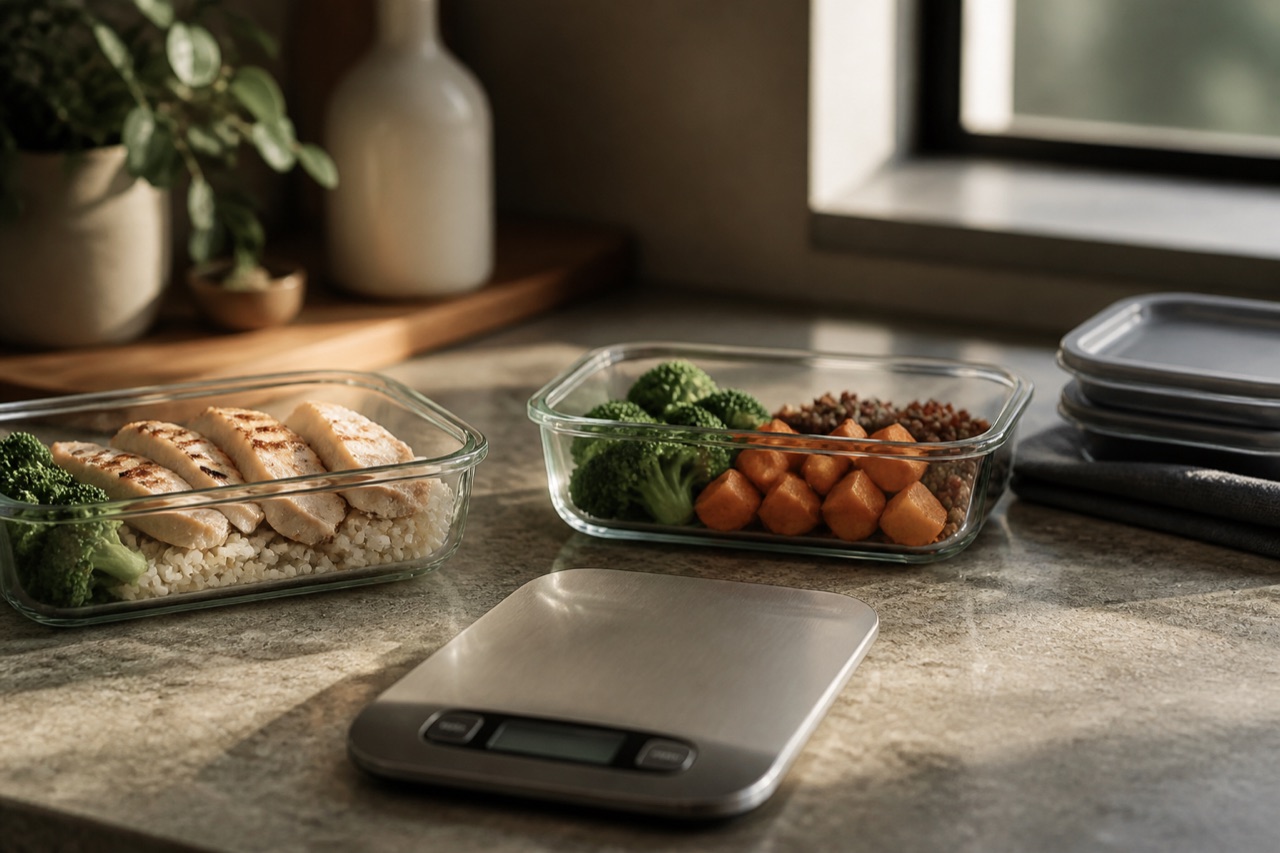
You are comparing two calorie counters that have been on the App Store since before most AI food apps existed. MyFitnessPal is the default almost everyone has tried. Lose It is the one friends describe as cleaner, lighter, less of a social network pretending to be a diary. The shortlist feels fair until you notice what neither of them is trying to be: a strength programme with dates on it.
The reasonable assumption is that you pick the cheaper Premium or the bigger database and get on with logging. Fine if food is the whole problem. It fails if you need muscle on a cut or a progressed week next to the diary. Start with best food tracking app; the Pocket Fit head to head is Pocket Fit vs MyFitnessPal.
Our bias, stated first
We make Pocket Fit. We are not a neutral third party between Lose It and MyFitnessPal. This piece exists partly to sell a third option, so read every sentence about us as a claim from an interested party.
What we can do is keep the Lose It versus MyFitnessPal comparison checkable. Claims about those two come from their own websites, help centres or store listings, with sources at the end. Prices in this category move by region and promotion - historically Lose It sat below MyFitnessPal's annual Premium for a long stretch, and that gap has narrowed or closed in some markets. Verify live pricing on the App Store or Google Play before you decide. We will not invent a permanent "cheaper" winner.
Honesty tax: MyFitnessPal's published catalogue scale is still the industry's measuring stick, and Lose It's interface reputation is real. If all you want is a calorie logger, one of these two is probably the right purchase, not us.
The short answer
Choose MyFitnessPal if database breadth and finding branded, regional or restaurant food is your binding constraint, and you are willing to pay Premium for the fast paths (barcode, Meal Scan and voice logging sit behind Premium on MyFitnessPal's own help centre).
Choose Lose It if you want a long-running calorie counter with a large database and a simpler feel than the market leader, and you accept that barcode, photo and voice logging are Premium features on its listings too.
Choose Pocket Fit if you lift or want a multi-week programme, and food logging only matters because protein and training have to share one picture of you.
Choose neither Premium yet if you are only testing whether logging sticks. Both have free tiers for basic diary use; Cronometer's free Basic is stronger for micronutrients if that is your test - see free calorie counter apps.
Lose It vs MyFitnessPal side by side
Every figure below is the company's own published number or store pattern where we cite it. Where we are unsure of the exact 2026 price on your screen, we say so.
Read the price row as a warning, not a promise. App Store SKUs for both Lose It and MyFitnessPal show multiple price points by region and promotion.
MyFitnessPal: the database everyone measures against
What it genuinely does well. Scale. Its blog calls the catalogue one of the largest in the world and cites over 20.5 million foods; its homepage invites you to join a user base in the hundreds of millions. That long tail still matters for branded, petrol-station and out-of-home food. Premium unlocks the fast paths: barcode scan (Premium-only since 1 October 2022 per its help centre), Meal Scan, voice logging, gram-precise macro goals.
Where friction lives. An open catalogue at that scale accumulates duplicates. Search is the slowest common path, and on repeat meals that cost is paid again and again. The free tier still works for manual logging; the fastest routes sit behind Premium.
Ideal user. Someone whose diet is mostly branded or out-of-home, who wants only a calorie counter, and who will pay if barcode culture is how they actually log.
Lose It: the simpler calorie counter, not a free lunch
Lose It has been in this category since 2008. Its App Store copy emphasises calorie counting, goals, community and a large food database, and Premium adds barcode scanning, smart photo and voice logging, device syncing and custom nutrient targets per its support article on membership tiers.
What it genuinely does well. For many people it feels less noisy than MyFitnessPal: fewer social features in the way of the diary, a long track record, and a product shaped around weight-loss logging rather than becoming a platform. Lifetime purchase options exist on Lose It's own pricing support page - a structural difference from MyFitnessPal's subscription-only Premium story.
Where friction lives. On the free tier, the pattern matches the category's expensive habit: basic logging is free, and the fast paths are Premium. Our earlier free-tier writing treated Lose It the same way as MyFitnessPal on that point - barcode behind Premium means every packaged lunch becomes a search unless you pay. After Premium price rises in some markets, the old "Lose It is obviously cheaper" folklore is something you must verify on your own App Store screen, not inherit from a 2022 review.
Ideal user. Someone who wants a focused calorie diary, prefers Lose It's interface, and may care about a Lifetime unlock if that SKU is available in their region.
Pocket Fit as the third option when training matters
We are not claiming to beat either catalogue. Fuel tracks protein, carbs and fat with photo, barcode, templates and no red numbers. The product centre is a dated multi-week programme, a published progression rule, a scheduler for missed sessions, an AI coach for mid-session rebuilds, and a body budget across workout, streak, sleep and nutrition.
Buy us when the calorie logger is incomplete because the week of training is the other half of the problem. Do not buy us expecting MyFitnessPal's long tail or Lose It's Lifetime SKU.
What the evidence says: the diary only works while you keep it
Burke, Wang and Sevick reviewed 22 studies for the Journal of the American Dietetic Association and found a consistent association between dietary self-monitoring and weight loss, while calling the evidence weak on methodology. Turner-McGrievy and colleagues analysed two six-month mobile trials (N=124) in the Journal of the Academy of Nutrition and Dietetics and found fewer than half still tracking after week 10, with days logging at least two eating occasions explaining the most variance in weight loss.
That is why Premium feature gates matter more than brand loyalty. If barcode scan is how you log packaged food, and it sits behind paywalls on both apps, the "free" diary is slower on the meals that fill a modern week. The app you abandon in week three does not get credit for its database size.
For lifters, protein is the other number. Longland and colleagues found higher protein in an energy deficit with training produced meaningful lean-mass differences; Morton and colleagues' meta-analysis of 49 trials (1,863 people) put a practical ceiling near 1.62 g/kg/day. Neither Lose It nor MyFitnessPal programmes the bar that protein is supposed to protect.
Where the evidence and our claims run thin
No head-to-head RCT of Lose It versus MyFitnessPal versus Pocket Fit. Feature and price comparisons are product journalism, not clinical proof.
Database size claims are not comparable. Companies count entries differently. "Bigger" is directionally useful and still not a lab result.
Prices move. Lose It's support page listing $79.99/year Premium and MyFitnessPal's published Premium bands can diverge from what your store shows today. Historical "Lose It is cheaper" takes can be stale. Check before you pay.
Our third-option pitch flatters us when your only job is logging brunch. If you do not train, you do not need our programme.
Who should buy which
Buy MyFitnessPal if lookup breadth is what breaks other apps, especially branded and restaurant food. Pay Premium if barcode and Meal Scan are how you log.
Buy Lose It if you prefer its diary experience, want a large database without living inside MyFitnessPal's social gravity, and the Premium or Lifetime offer on your store is the deal you actually want.
Buy Pocket Fit if strength training is part of the goal and you are tired of a food app that never sees your week.
Buy Cronometer instead if micronutrients are the point - see Pocket Fit vs Cronometer and free calorie counter apps.
Put it together
MyFitnessPal answers with catalogue scale. Lose It answers with a simpler diary and, sometimes, Lifetime pricing. Neither programmes your squat on a cut.
Pocket Fit is the third option when training is why the diary exists: Fuel, a dated programme, a scheduler, an AI coach, and a body budget.
The founder note: Georgi built Pocket Fit after going from 122 kg to winning first place at The Yard Games, having lost 38 kg along the way. Separate food and gym apps fractured the bad weeks. That is our story.
Lose It vs MyFitnessPal: common questions
Is Lose It better than MyFitnessPal?
Neither is better in general. MyFitnessPal usually wins on published database scale and finding obscure branded food. Lose It often wins on feel and, depending on your store, Lifetime purchase options. Pick by diet shape and interface, not by a single feature checklist.
Which is cheaper in 2026?
Do not trust a remembered figure. Lose It's support material has listed Premium at $79.99 USD per year, and MyFitnessPal Premium is often in the same annual band with monthly options and a Premium+ tier. Historically Lose It was the cheaper Premium story. Verify on your App Store or Google Play before you subscribe.
Do both paywall barcode scanning?
Yes, on the free tiers as commonly described: MyFitnessPal's help centre dates barcode Premium-only status to 1 October 2022, and Lose It's Premium tier includes barcode, photo and voice logging. Pocket Fit does not put barcode behind a separate food paywall.
Can these apps programme strength training?
No. They are calorie and habit diaries. If you need a dated multi-week gym programme with progression and food in one place, that is a different product class - which is where we sit.
Which is better for weight loss?
The one you still open after week ten. Turner-McGrievy's mobile trials found fewer than half still tracking by then. Database size does not help a closed app.
References
- MyFitnessPal. Premium plans and pricing. myfitnesspal.com/premium
- MyFitnessPal Help Centre. Barcode scan Premium-only from 1 October 2022; Meal Scan and related Premium features. support.myfitnesspal.com
- MyFitnessPal. Blog database scale claims. blog.myfitnesspal.com
- Lose It! Support. Membership Tiers & Pricing (Premium $79.99 USD/year and Lifetime options as published). loseit.zendesk.com
- Apple App Store. Lose It! - Calorie Counter. apps.apple.com
- Burke LE, Wang J, Sevick MA (2011). Self-monitoring in weight loss: a systematic review of the literature. Journal of the American Dietetic Association, 111(1), 92-102. DOI: 10.1016/j.jada.2010.10.008
- Turner-McGrievy GM, Dunn CG, Wilcox S, Boutté AK, Hutto B, Hoover A, Muth E (2019). Defining adherence to mobile dietary self-monitoring and assessing tracking over time. Journal of the Academy of Nutrition and Dietetics, 119(9), 1516-1524. DOI: 10.1016/j.jand.2019.03.012
- Longland TM, Oikawa SY, Mitchell CJ, Devries MC, Phillips SM (2016). Higher compared with lower dietary protein during an energy deficit combined with intense exercise promotes greater lean mass gain and fat mass loss: a randomized trial. American Journal of Clinical Nutrition, 103(3), 738-746. DOI: 10.3945/ajcn.115.119339
- Morton RW et al. (2018). Protein supplementation meta-analysis. British Journal of Sports Medicine, 52(6), 376-384. DOI: 10.1136/bjsports-2017-097608
- Pocket Fit pricing. pocket-fit.app/pricing
Pocket Fit is a fitness and wellbeing app, not a medical device. It does not diagnose, treat or prevent any condition. Always consult a qualified healthcare professional before starting or changing a training or nutrition programme, and if you have persistent problems with sleep, pain or fatigue. Georgi, founder of Pocket Fit. He went from 122 kg to winning first place at The Yard Games, having lost 38 kg along the way.
Related articles
Free tools
Train smarter with Pocket Fit
Download the app