Pocket Fit vs JuggernautAI: one peaks the big three, the other runs the consumer gym week
JuggernautAI is a powerlifting and powerbuilding coach-in-an-app from Juggernaut Training Systems - RPE, readiness, meet peaking, squat bench deadlift focus - at a specialist price. Pocket Fit is a general gym programme with food at a consumer price. Confusing them is how people buy a meet prep tool when they needed a week they will actually finish.
11 min read
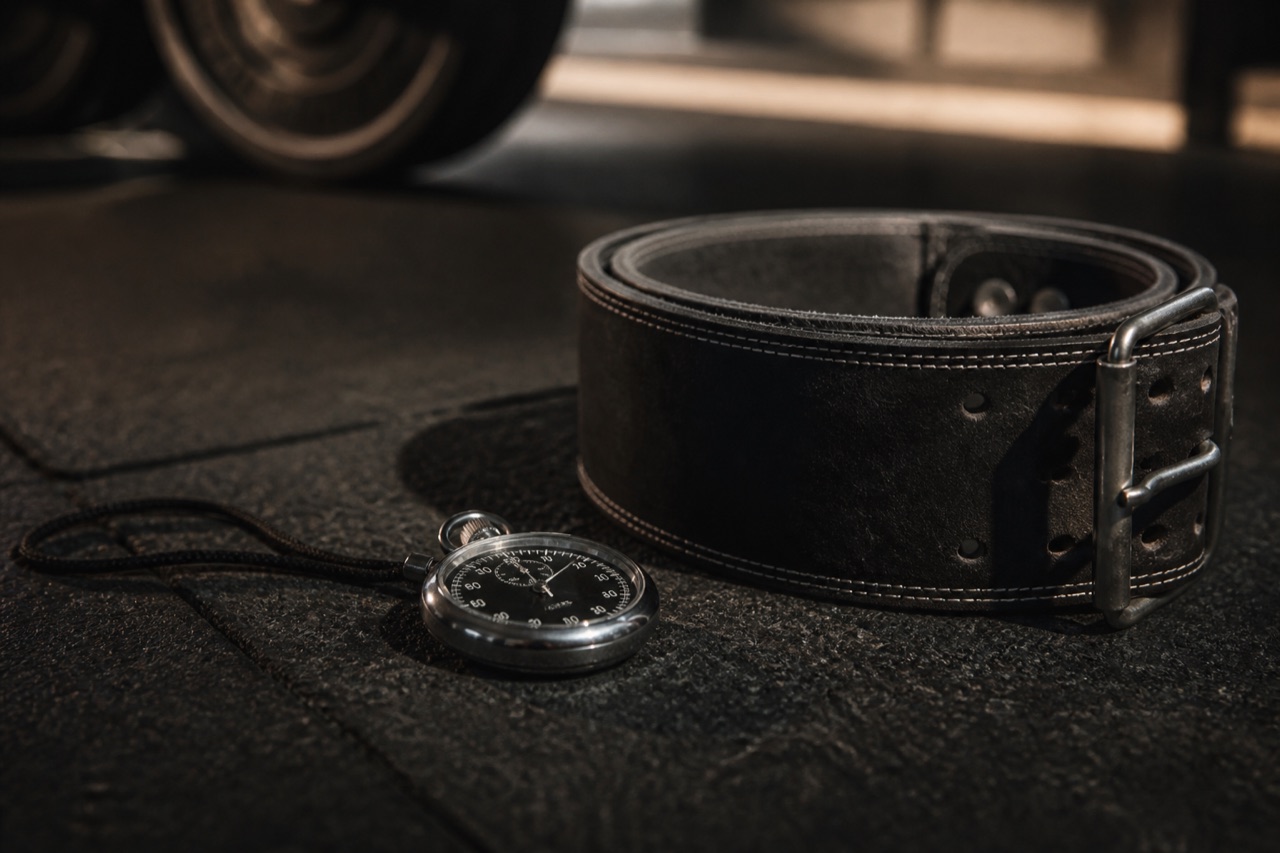
You want to get stronger and you have heard of Juggernaut. That is why JuggernautAI looks like the serious answer: individualised powerlifting or powerbuilding plans, autoregulation from how you feel and perform, volume landmarks, and a system built to peak toward a meet. Pocket Fit is not trying to be a competition coach. It is trying to be the dated week, the plate and the reshuffle when Wednesday collapses.
They are not the same job. JuggernautAI is specialist strength programming for lifters who live in the big three and periodisation blocks. Pocket Fit is a consumer programme engine: scheduled multi-week sessions, a published progression rule, Fuel, and a scheduler for missed days.
That distinction decides whether you are paying for meet peaking or for a gym week you can keep. Wider map: best workout tracking app 2026. Neighbours: Pocket Fit vs Boostcamp and Pocket Fit vs Fitbod.
Our bias, stated first
We make Pocket Fit. We sell a subscription. This article exists partly to sell it, so read every sentence about us as a claim from an interested party.
What we can do is make it checkable. Everything factual about JuggernautAI comes from its App Store listing, Juggernaut help pages and publicly listed subscription prices as checked in 2026, with the sources at the end. We have not run a long term controlled trial of JuggernautAI's peaking blocks and will not pretend we did.
Now the honesty tax. JuggernautAI is one of the most serious consumer powerlifting programming products available, and it is better than us at meet-oriented periodisation, RPE-style autoregulation and big-three focus. If you are preparing for a competition or you want Juggernaut methodology wrapped in software, JuggernautAI is often the right product. The price commonly listed around $34.99 a month or $349.99 a year reflects that specialist positioning - check live, because store and web offers vary.
The short answer
Choose JuggernautAI if you are a powerlifter or powerbuilder who wants AI programming from Juggernaut Training Systems, readiness and RPE-style adaptation, and meet peaking around squat, bench and deadlift - and you are willing to pay specialist subscription prices.
Choose Pocket Fit if you want a general gym programme at a consumer price: a dated multi-week plan you can read, food in the same app, a scheduler that reshuffles a missed day, and a body budget across workout, streak, sleep and nutrition - not a competition peaking coach.
The dividing question is not which app says "AI" louder. It is whether you need meet peaking or a week that survives real life.
Pocket Fit vs JuggernautAI side by side
Every JuggernautAI figure below is from public listings as checked in 2026, not something we measured. Prices vary by store, region and web promotions - check live before you buy.
Prices are published differently by region and channel. Read the last row as product shape, not an exchange-rate comparison.
JuggernautAI: specialist strength coaching in software form
JuggernautAI's job is to deliver individualised powerlifting or powerbuilding training that adapts as you progress, with the methodological DNA of Juggernaut Training Systems. The App Store story emphasises goals, volume landmarks, training frequency for the big lifts, weak-point work and periodisation that updates from session feedback. That is a serious product for a serious niche.
Three limits, stated as fairly as we can.
It is priced and shaped for specialists. Around $34.99 a month or about $349.99 a year is not "another gym logger". For competitive lifters, that can still be cheaper than a human coach. For someone who wants a general programme plus food, it is often the wrong category of spend.
Meet peaking is not the same as consumer consistency. A peaking block assumes you can protect the calendar. If your failure mode is missed Wednesdays, a beautiful peaking model still needs a life that cooperates.
Food sits outside the centre of the product. A stalled total is not always a programming problem. JuggernautAI is not trying to be our Fuel stack - fine, until the plateau is nutritional.
Pocket Fit: a programme engine with the rule printed on it
Ours works the other way round. The programme comes first and the session is an output of it - for general gym life, not for a meet date.
A scheduled multi-week programme. Goal, days, difficulty, equipment, split and injuries become a dated week of sessions with written reasons. You read it before your first set; it updates from what you log.
A progression rule you can read. Reps first inside the range, then the smallest weight increment, and only off a confirmed plateau - two misses, not one. Mechanics in reps first, then weight. We are not claiming Juggernaut-grade peaking logic. We are claiming a rule you can argue with.
Injuries in your own words. Free text becomes an input to exercise selection.
Fuel. Scan a plate or barcode for protein, carbs and fat - no red numbers, no shame. When the stall is under-eating, a peaking app without food leaves you guessing.
The scheduler, the AI coach and the body budget. A missed session is reshuffled into the week. One sentence to the AI coach rebuilds a session from the same rules. The body budget tallies workout, streak, sleep and nutrition.
Named templates: Pocket Fit vs Boostcamp. Pure logging: Pocket Fit vs Strong. Overload shortlists: progressive overload apps.
What the evidence supports: overload is real, and so is the weekly dose
Here is the training science that decides this comparison, and it is not about brand prestige.
Michie and colleagues' meta-regression in Health Psychology found clear support for self-monitoring of behaviour in physical activity interventions. Logging and following a plan both sit near that finding. We will not pretend specialist programming is worthless.
Schoenfeld, Ogborn and Krieger pooled 15 studies for the Journal of Sports Sciences and found a graded dose-response between weekly resistance training volume and muscle growth: roughly 0.37% additional gain for each extra set performed per muscle group per week. The dose is sets per week. A peaking block you cannot finish still loses to ordinary weeks you complete.
Plotkin and colleagues, including Schoenfeld, showed in PeerJ that progressing by adding repetitions at a fixed load can match load progression for hypertrophy. That is the published case for a reps-first rule in general gym training. Nothing says our consumer scheduler beats JuggernautAI for meet totals - only that the accumulated week is what the broader hypertrophy literature measures.
Training literature also commonly cites progressive overload and readiness-based autoregulation as useful for strength athletes. That supports why JuggernautAI exists. It does not prove you need it if you are not competing.
Where our claims run thin
There is no head to head trial. Nobody has compared Pocket Fit to JuggernautAI for strength outcomes in a randomised study. Superiority claims are marketing, ours included.
The volume meta-analysis is good, not strong. Short studies, mostly young male participants, small per-set effect size. It is also a hypertrophy lens, not a powerlifting total lens.
Self-monitoring and coaching structure both explain part of JuggernautAI's value. If Michie holds, recording and following a plan already helps. Our claim is for a consumer week with food, not that JuggernautAI users get nothing.
"Adaptive" and "AI" are muddy words. Greig and colleagues reviewed autoregulation for Sports Medicine and found definitions inconsistent enough that implementation stays ambiguous.
And JuggernautAI is deeper where we are shallower on competition prep. Meet peaking, big-three periodisation and Juggernaut methodology are real advantages a consumer scheduler does not erase.
Who should buy which
Buy JuggernautAI if you want powerlifting or powerbuilding AI programming with meet peaking DNA, and specialist pricing around $34.99 a month or $349.99 a year (check live) is acceptable for that job.
Buy Pocket Fit if you want a general gym programme with a published progression rule, Fuel, a miss scheduler, and consumer pricing on pocket-fit.app/pricing - not a competition coach.
Buy neither alone if you only need a free template library or a cheap logger. See Pocket Fit vs Boostcamp and Pocket Fit vs Strong.
Put it together
Both apps remove friction and hand back different things. JuggernautAI hands back specialist strength programming: big three focus, readiness-style adaptation, meet peaking at a premium price. Pocket Fit hands back a consumer week: dated sessions, reps before weight, a scheduler for missed Wednesdays, an AI coach that rebuilds from one sentence, Fuel, and a body budget across workout, streak, sleep and nutrition.
The founder note, because it explains the design. Georgi built Pocket Fit after going from 122 kg to winning first place at The Yard Games, having lost 38 kg along the way. The app is not shaped by the good weeks. It is shaped by the bad ones, the missed Wednesdays and the sessions rebuilt in the car park. That is our story, and why the scheduler forgives.
Pocket Fit vs JuggernautAI: common questions
Is Pocket Fit better than JuggernautAI?
Neither is better in general, because they produce different things. JuggernautAI is powerlifting and powerbuilding AI programming with meet peaking focus, commonly priced around $34.99 a month or $349.99 a year in 2026 listings - check live. Pocket Fit is a consumer programme engine with food and a miss scheduler. If you are peaking for a meet, JuggernautAI. If you need a general gym week that includes the plate, us.
Is JuggernautAI worth the price?
It can be, for the right lifter. Specialist programming that replaces hours of coaching can justify a high monthly fee. It is often the wrong spend if you only wanted a dated week, food logging and forgiveness when life interrupts. Compare live store and web pricing before you decide.
Does JuggernautAI replace a human powerlifting coach?
It replaces a large slice of programming and autoregulation for many athletes, which is why people buy it. It is still software, not a coach in the room. Pocket Fit is not trying to win that comparison. We are trying to win the consumer consistency comparison.
Which is better for beginners who just want a gym plan?
Usually Pocket Fit, or a template library such as the ones discussed in Pocket Fit vs Boostcamp. JuggernautAI assumes more strength-sport intent than most first-year gym goers need.
Which app is better if my training keeps getting derailed?
That is the case for Pocket Fit. The volume research measures the dose in sets per week, at roughly 0.37% additional gain per extra weekly set, so the week is what needs protecting. Our scheduler moves a missed session into the remaining days, and with sleep and food on file, a stall can be read as under-eating or under-sleeping rather than as a failure to follow a peaking block.
References
- Apple App Store. JuggernautAI listing: powerlifting and powerbuilding programming, adaptation from feedback, in-app purchase commonly shown around $34.99 monthly, checked 2026 - verify live. apps.apple.com
- JuggernautAI help. Difference between App Store / Play Store and website subscriptions. help.jtsstrength.com
- Schoenfeld BJ, Ogborn D, Krieger JW (2017). Dose-response relationship between weekly resistance training volume and increases in muscle mass: A systematic review and meta-analysis. Journal of Sports Sciences, 35(11), 1073-1082. DOI: 10.1080/02640414.2016.1210197
- Plotkin D, Coleman T, Contreras B, et al. (2022). Progressive overload without progressing load? The effects of load or repetition progression on muscular adaptations. PeerJ, 10, e14142. DOI: 10.7717/peerj.14142
- Michie S, Abraham C, Whittington C, McAteer J, Gupta S (2009). Effective techniques in healthy eating and physical activity interventions: a meta-regression. Health Psychology, 28(6), 690-701. DOI: 10.1037/a0016136
- Greig L, Stephens Hemingway BH, Aspe RR, Cooper K, Comfort P, Swinton PA (2020). Autoregulation in Resistance Training: Addressing the Inconsistencies. Sports Medicine, 50(11), 1873-1887. DOI: 10.1007/s40279-020-01330-8
- Apple App Store. Pocket Fit (Pocket Fit), listing, checked 2026. apps.apple.com/gb/app/pocket-squats/id6748518785
- Pocket Fit pricing, as published on pocket-fit.app/pricing
Pocket Fit is a fitness and wellbeing app, not a medical device. It does not diagnose, treat or prevent any condition. Always consult a qualified healthcare professional before starting or changing a training or nutrition programme, and if you have persistent problems with sleep, pain or fatigue. Georgi, founder of Pocket Fit. He went from 122 kg to winning first place at The Yard Games, having lost 38 kg along the way.
Related articles
Exercise guides from this article
Browse the full exercise library →Train smarter with Pocket Fit
Download the app